
- Does your child become overwhelmed with sights and sounds?
- Does your child avoid certain activities or environments?
- Does your child have difficulty remaining seated for tasks and appears to always be on the go?
Regulation

Regulation, also known as emotional regulation, is the ability to organize behaviour in response to emotions. A child who is regulated is able to receive information from their environment, interpret messages from their body, and apply functional strategies, such as ask for help from a trusted adult, to decrease distress or discomfort.
Children who are regulated are better able to attend, communicate, and problem solve. Many factors, including biology and environment, are involved in the development of emotional regulation in children. A child’s unique sensory processing abilities is part of their biological makeup.
Sensory Processing
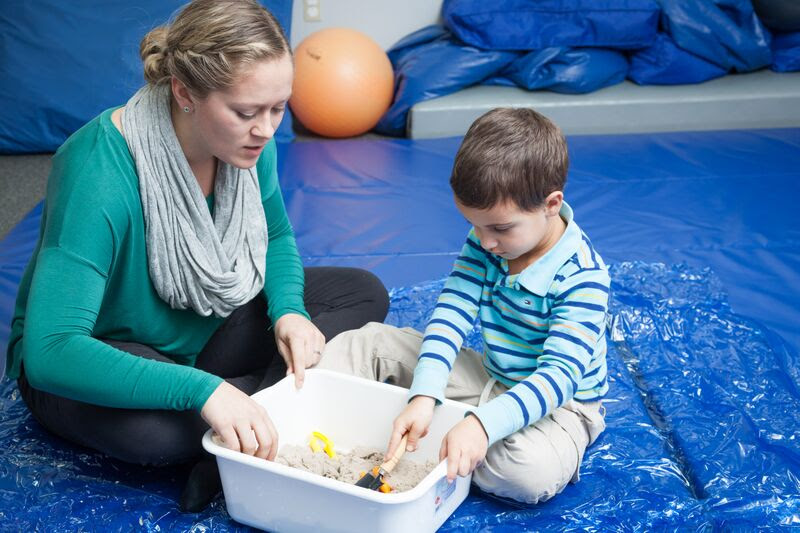
Many children either feel sensations too much or too little making it difficult for them to feel just right. This can have a significant impact on their mood and behaviour.
Sensory processing is the ability to receive, organize, interpret, and respond to information from our sensory system. Our sensory system includes 8 different senses; vision, taste, smell, hearing, touch, body position (proprioception), movement (vestibular), and body awareness (interoception). When a child has trouble receiving, organizing, interpreting or responding to information from these senses, it is known as a sensory processing challenge.
The following are examples of signs of sensory processing challenges:
- Sensitivity to bright lights, or may enjoy bright lights or spinning objects.
- Chewing non food items, or avoids certain food textures.
- Dislikes strong smells, or smells objects frequently.
- Covers ears to block sounds, distracted in noisy environments, or seeks out loud noises.
- Dislikes certain clothing textures and tags, or is drawn to certain textures.
- Excessive clumsiness, or avoidance of physical contact.
- Poor coordination, motion sickness, or a love for moving and jumping.
- Poor bladder or bowel control, unable to detect temperature or pain, unable to communicate feelings.
At Achieve Therapy Centre our clinicians have a special interest in sensory processing and regulation and are equipped with the latest tools and strategies to help both you and your child. We will assess the unique needs of your child in an initial assessment and develop a therapy plan to support your child.
Sensory Processing & Regulation Assessment: This assessment is completed by one of our Occupational Therapists. It is completed in 1 assessment session (approximately 1 hour in length) and includes engaging your child in play, observing how your child plays and interacts with their environment, a caregiver questionnaire and interview, and a school questionnaire (if applicable). After this assessment session a 1 hour caregiver meeting will be scheduled to discuss results and recommendations. A report containing goals and recommendations will also be provided.
Are you interested in services for regulation or sensory processing?
 Achieve Therapy Centre